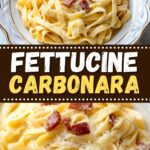
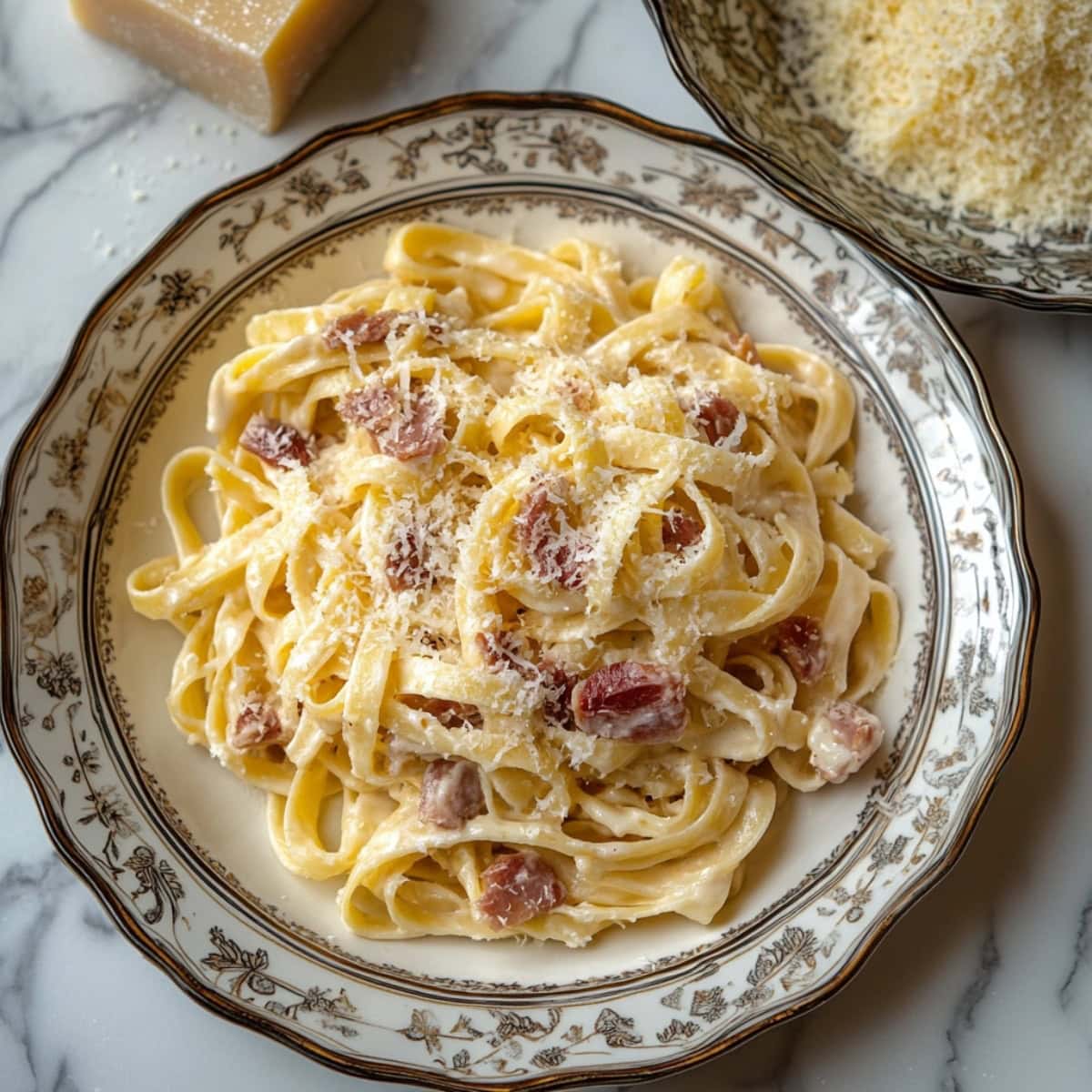
For me, Fettuccine Carbonara is like Italy’s way of giving me a warm, carb-filled hug.
Every time I make it, I’m amazed by how something so simple can taste so luxurious.
The real magic happens when the heat of the pasta melts eggs and aged Parmigiano-Reggiano into a silky, rich sauce that coats every strand.
WANT TO SAVE THIS RECIPE?
Enter your email below & we’ll send it straight to your inbox.
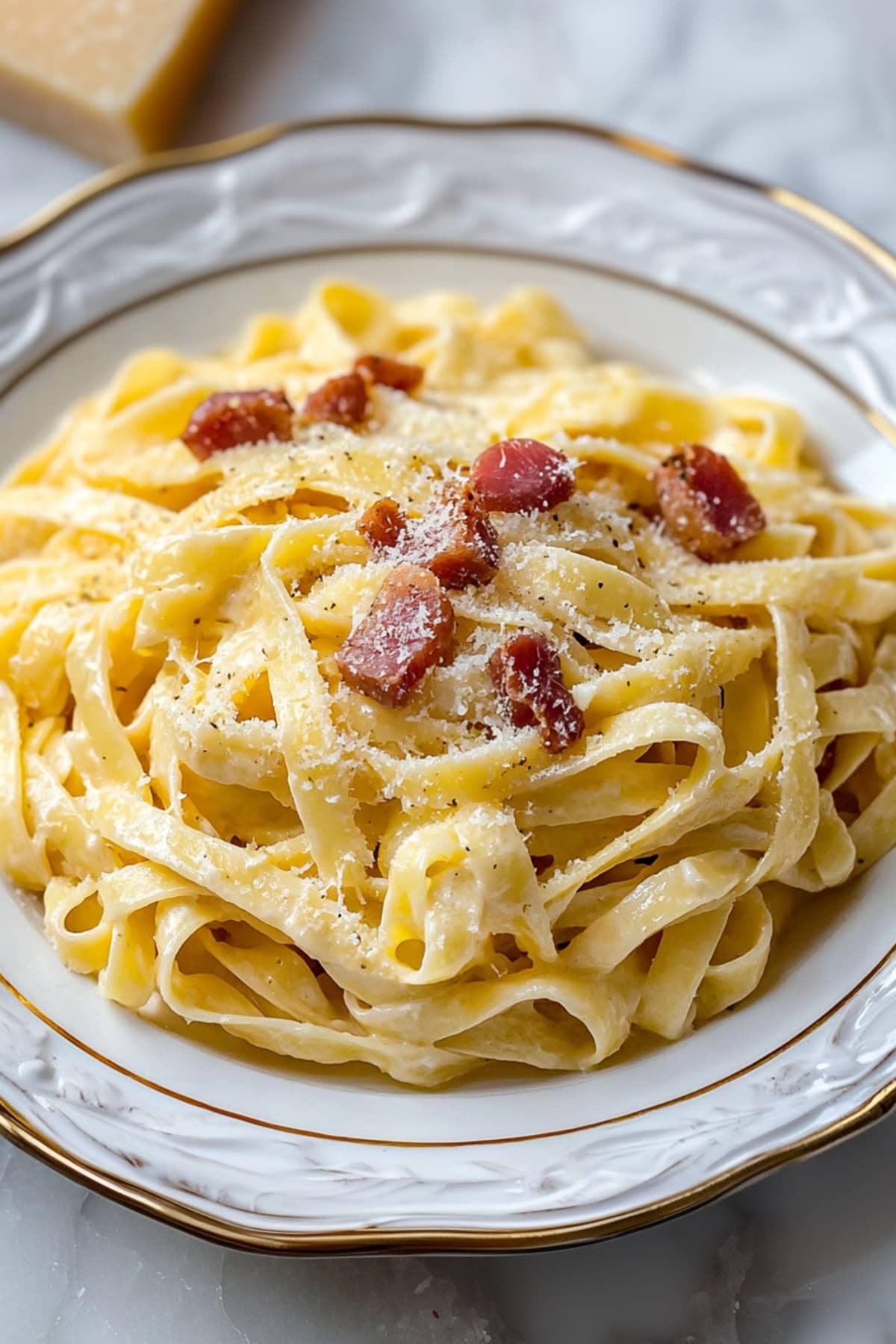
There’s no heavy cream here—just the magic of hot pasta melting everything together into a rich, glossy coating. A little black pepper for heat, and boom—perfection on a plate.
The best part? It comes together with just a handful of simple ingredients, but the flavor is pure magic.
This dish is my go-to when I want to impress someone—or, let’s be real, just treat myself. Once you try it, you’ll be addicted!
Ingredients You’ll Need
- Fettuccine: This wide, flat pasta is the heart of carbonara. Its flat surface is perfect for capturing the creamy sauce.
- Pancetta or Guanciale: They offer a saltiness to enhance the flavors of the carbonara sauce. I sometimes have trouble finding traditional guanciale at my local meat counter, but thankfully pancetta works just as well!
- Eggs: They give the sauce a luxurious, creamy texture and golden hue.
- Parmigiano-Reggiano: The rich, nutty flavors integrate perfectly with the eggs to enrich the creamy sauce. I like to have a little extra finely grated Parmesan cheese on hand for garnishing! Pecorino cheese is a great option, too.
- Garlic: Although not traditional in Italy, finely diced garlic adds zest, preventing the dish from being bland.
- Freshly Ground Black Pepper: It’s essential for seasoning. I recently bought a pepper grinder, and I’ll never go back to pre-ground pepper. It makes such a huge difference in flavor!
- Salt: It’s used in the pasta water to intensify the flavor.
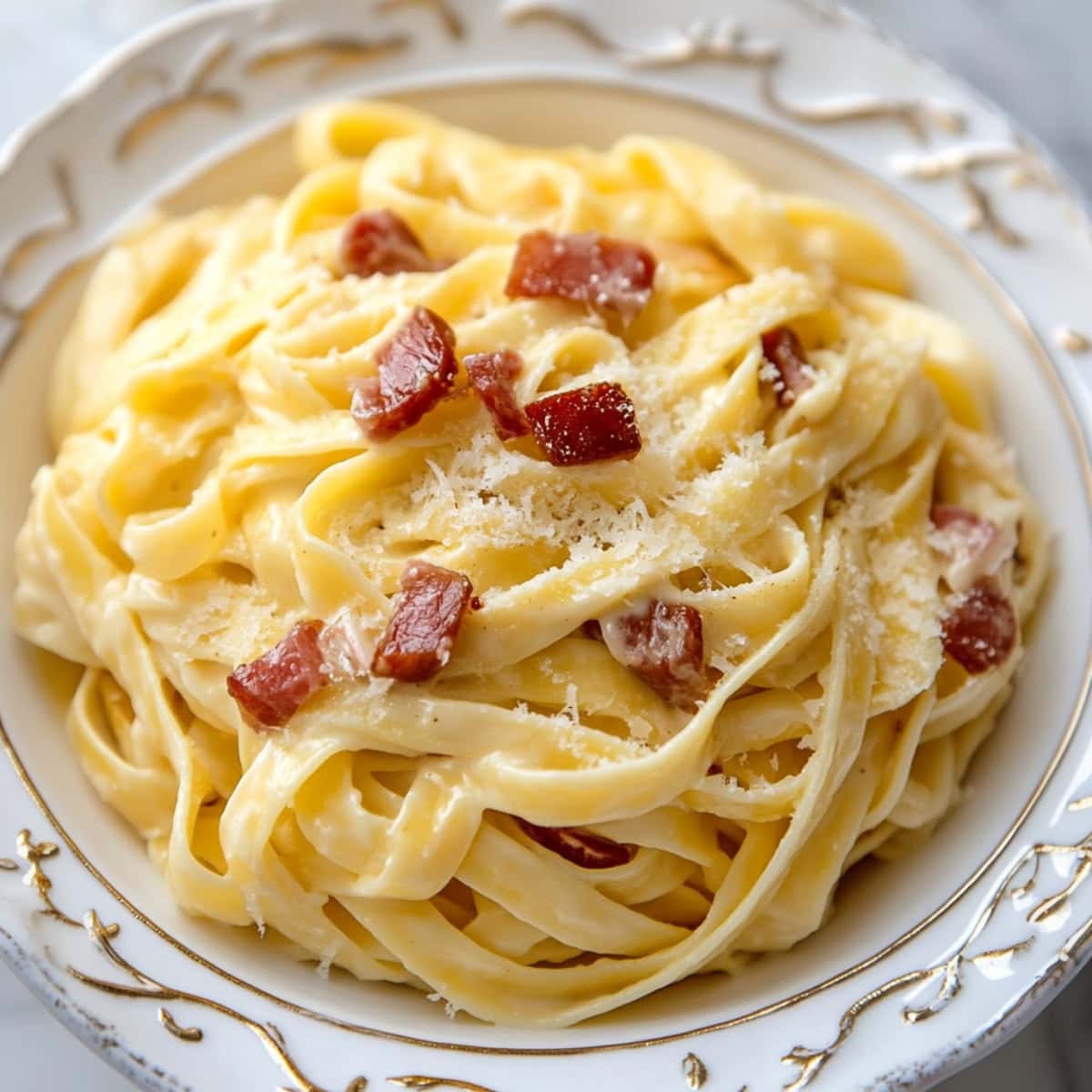
How to Make Fettuccine Carbonara
I promise this dish isn’t intimidating! I love making this dish because it comes together with just a few simple ingredients, and the results are always so impressive. Just follow these simple steps.
- Prepare the egg mixture . In a large mixing bowl, whisk together 2 whole eggs, 2 egg yolks, grated Parmigiano-Reggiano, and a generous amount of freshly ground black pepper until smooth. Set aside. 2. Cook the pasta . Bring a large pot of salted water to a boil. Add the fettuccine to the pasta cooking water and cook according to package instructions until al dente. 3. Cook the pancetta . While the pasta cooks, heat a large frying pan over medium heat. Add the pancetta or guanciale and sauté until golden and crispy (about 5-6 minutes). 4. Add the garlic . Stir in the finely chopped garlic to the bacon mixture and cook for about 1 minute, just until fragrant. Be careful not to let the garlic burn. 5. Reserve some pasta water . Before draining the pasta, reserve 1 cup of the pasta water. 6. Combine the pasta and pancetta . Transfer the hot, drained pasta directly into the skillet with the pancetta and garlic. Toss to coat the pasta in the rendered fat. 7. Make the sauce . Remove the skillet from the heat. Quickly pour the egg and cheese mixture over the pasta, tossing vigorously with tongs to coat. Add the reserved pasta water gradually, a little at a time, until a silky sauce forms. (I usually don’t need the entire cup. Add just enough to achieve your desired consistency.) 8. Serve . Plate the pasta immediately. Top with extra Parmesan cheese and freshly ground black pepper to taste.
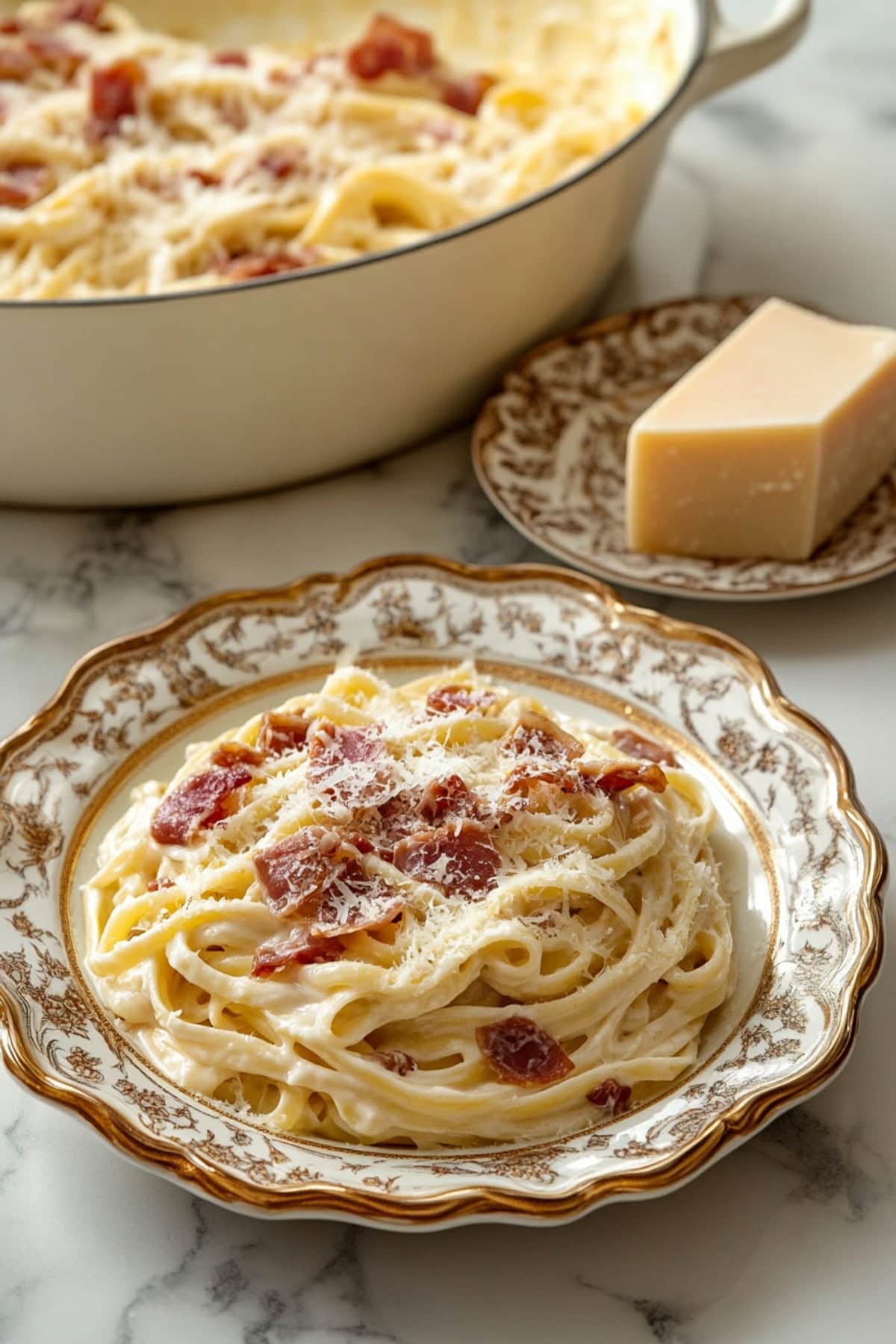
Tips for the Best Fettuccine Pasta Carbonara
I’ve got some tried-and-true tips to help you nail it every time. Let’s make some pasta magic!
- Select your favorite meat. I found that traditional guanciale (cured pork cheek) provides the most authentic flavor. But pancetta is an excellent alternative if guanciale isn’t available.
- Skip the pre-grated stuff. I always use freshly grated Parmigiano-Reggiano. Pre-grated cheese often contains anti-caking agents that can make your sauce grainy.
- Room temperature is a must. Bring the eggs to room temperature before starting. Cold eggs cause the sauce to seize up when combined with hot pasta.
- Don’t get scrambled! Never add the egg mixture while the pan is still on the heat. This is the number one rule to prevent scrambled eggs instead of a silky sauce.
- Serve it in style. Serve immediately on warmed plates drizzled with olive oil. The sauce thickens as it cools, so timing is crucial for the perfect consistency. I like to pair it with a crisp green salad and a light Italian white wine like Frascati or Pinot Grigio.
- Try fun variations. Substitute bacon for pancetta/guanciale. Add peas for color and sweetness. Mix in Pecorino Romano for a sharper, saltier flavor. I take the simple route with just a drizzle of my best olive oil!
How to Store
Have leftover pasta ? Here’s how I keep it fresh.
To Store: Place leftovers in an air-tight container and refrigerate promptly, ideally within 2 hours of cooking. Store in the fridge for up to 3-4 days, but consuming it sooner ensures better flavor and texture. Do not freeze this recipe, as the consistency will change. To Reheat: Reheat gently on the stovetop by adding a small amount of olive oil, butter, or cream to a skillet over low heat. Stir continuously to restore the creamy consistency. Or use a bain-marie to even heat or microwave in short intervals. I always add a splash of liquid if needed to prevent drying out.
Fettuccine Carbonara
4
10
20
763
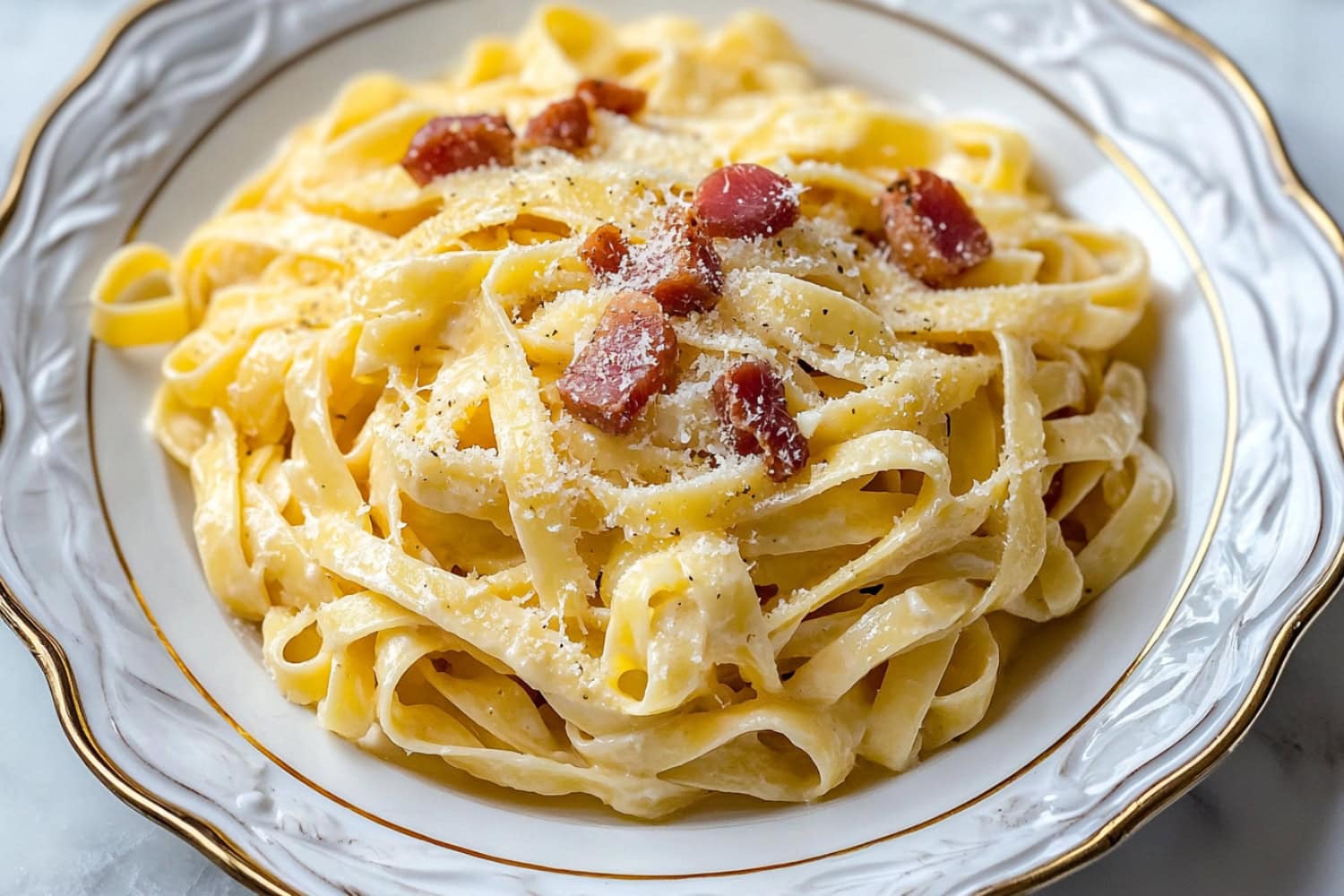
This fettuccine carbonara is so luxurious and indulgent! The combination of pancetta, Parmesan cheese, and eggs creates a dish fit for a king.
Ingredients
- 16 oz fettuccine
- 150 g pancetta or guanciale, cut into batons
- 4 large eggs (2 whole eggs + 2 yolks)
- 1 cup freshly grated Parmigiano-Reggiano
- 2 cloves garlic, minced
- Freshly ground black pepper
- Salt for pasta water
Instructions
- In a large mixing bowl, whisk together 2 whole eggs, 2 egg yolks, grated Parmigiano-Reggiano, and a generous amount of freshly ground black pepper until smooth. Set aside.
- Bring a large pot of salted water to a boil. Add the fettuccine and cook according to package instructions until al dente.
- While the pasta cooks, heat a large skillet over medium heat. Add the pancetta or guanciale and sauté until golden and crispy (about 5-6 minutes).
- Stir in the minced garlic and cook for about 1 minute, just until fragrant. Be careful not to let the garlic burn.
- Before draining the pasta, reserve 1 cup of the starchy cooking water.
- Transfer the hot, drained pasta directly into the skillet with the pancetta and garlic. Toss to coat the pasta in the rendered fat.
- Remove the skillet from the heat. Quickly pour the egg and cheese mixture over the pasta, tossing vigorously with tongs to coat. Add the reserved pasta water gradually, a little at a time, until a silky sauce forms. (You may not need the entire cup—add just enough to achieve your desired consistency.)
- Plate the pasta immediately. Top with additional grated Parmigiano-Reggiano and freshly ground black pepper to taste.
Notes
- Remove the skillet from the heat before adding the egg mixture to prevent the eggs from scrambling.
- Work quickly and continuously toss the pasta to ensure the sauce emulsifies evenly and becomes creamy.
- The reserved starchy pasta water is crucial for creating the smooth, glossy sauce. Add it gradually to control the consistency of the sauce.
- While Parmigiano-Reggiano is traditional, you can also mix in Pecorino Romano for a sharper, saltier flavor.
Nutrition
Total number of serves: 4
Calories: 763kcal
Fat: 31g
Saturated Fat: 11g
Cholesterol: 323mg
Sodium: 763mg
Carbohydrates: 82g
Fiber: 3g
Sugar: 2g
Protein: 36g
Calcium: 368mg
Phosphorus: 602mg
Selenium: 118mg
Share on Facebook
Share on Pinterest
