
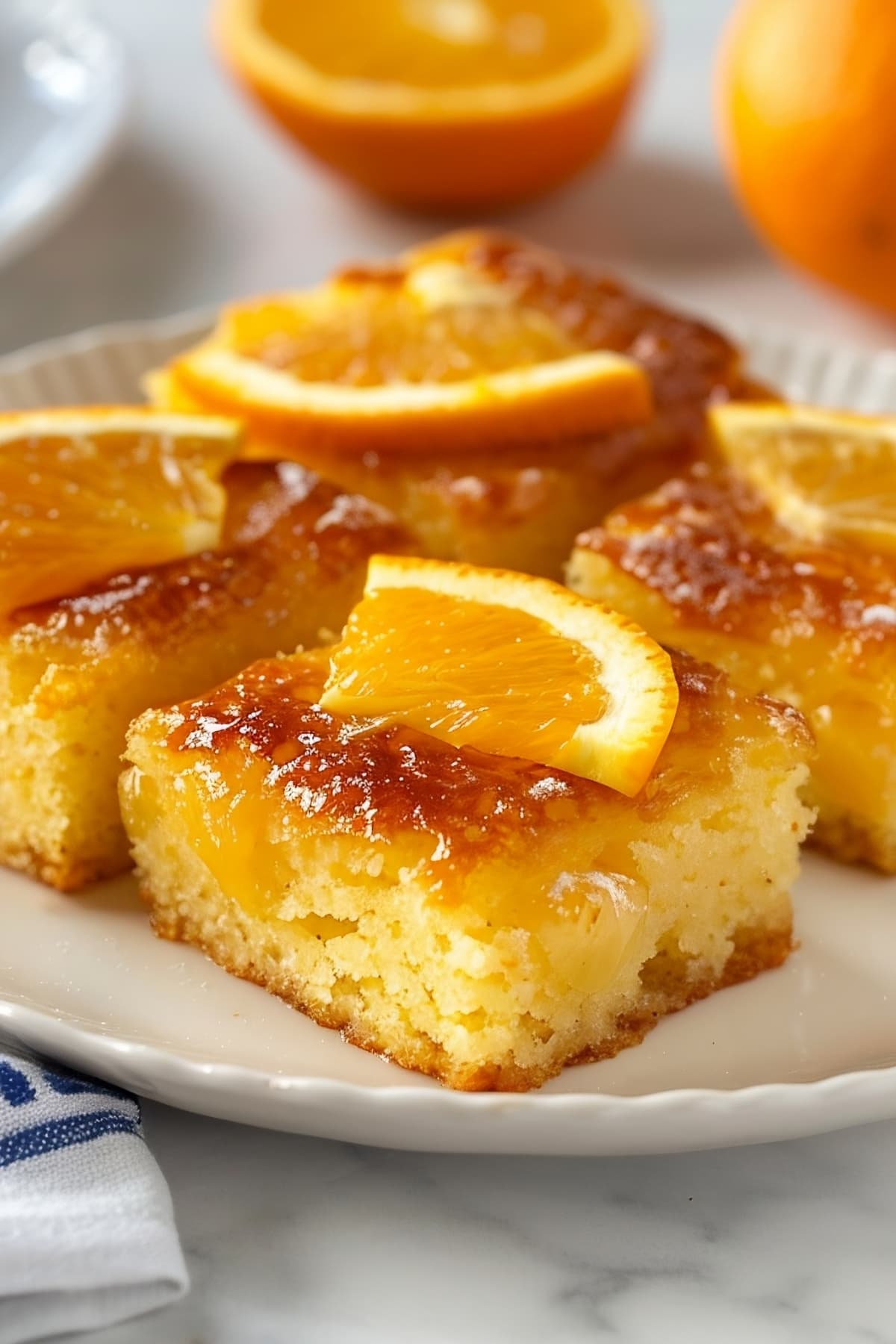
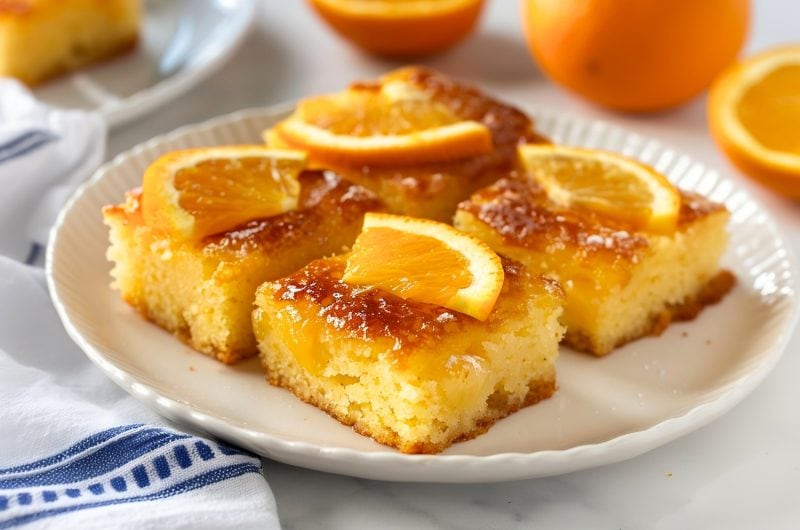
I just baked the most amazing Greek orange cake, also known as portokalopita . It’s sunshine on a plate!
The first bite transported me straight to a bakery in Santorini.
The secret is the aromatic orange zest. I used the juiciest oranges I could find, and the result was pure magic. And I love how this cake is both rustic and elegant.
If you’re looking for a dessert to brighten your day, give this recipe a try. Your tastebuds will thank you!
WANT TO SAVE THIS RECIPE?
Enter your email below & we’ll send it straight to your inbox.
Why You’ll Love This Greek Orange Cake
You’ll fall in love with this cake for more reasons than one!
Ingredients
Here’s a list of what you need to make this traditional cake:
- Phyllo Dough: The star ingredient to replace flour, creating a unique texture and flavor.
- Large Oranges: To infuse the cake with their tangy sweetness.
- Eggs: The binding agent holding the cake together.
- Greek Yogurt: A creamy addition to make the cake moist and tender.
- Vegetable Oil: It ensures a soft and delicate crumb.
- Sugar: It balances the tartness of the oranges and creates a delightful syrup.
- Vanilla Extract: A classic flavor enhancer.
- Baking Powder: The leavening agent to help the cake rise to perfection.
- Orange Zest: It packs a punch of citrusy flavor.
- Cinnamon Stick: A warm and fragrant spice to add depth to the syrup.
- Zest of 1 Orange: The extra boost elevates the syrup to new heights.
How to Make Greek Orange Cake
Follow these steps to whip up portokalopita :
- PREPARE THE PHYLLO. Bake the sliced phyllo strips until lightly browned and crumble into small pieces. 2. MAKE THE SYRUP. Boil the water, sugar, cinnamon, and orange juice and peel until slightly thickened. Let cool completely. 3. MIX THE BATTER. Whisk the eggs, sugar, orange zest, yogurt, oil, vanilla, baking powder, baking soda, and orange juice until smooth. 4. COMBINE INGREDIENTS. Stir the crumbled phyllo into the batter until evenly moistened. 5. BAKE. Pour batter into a greased pan and bake until golden brown and cooked through. 6. ADD THE SYRUP. Pour the cooled syrup evenly over the hot cake and let it absorb. 7. COOL & CHILL. Allow the cake to cool completely, then refrigerate for at least 2 hours or overnight. 8. SERVE & ENJOY. Slice the chilled portokalopita and serve with vanilla ice cream.
Tips For the Best Greek Orange Cake
These tips and tricks result in the very best cake:
- Dry out the phyllo. Spread out the phyllo sheets and let them dry completely before crumbling into the batter. This prevents the cake from getting soggy.
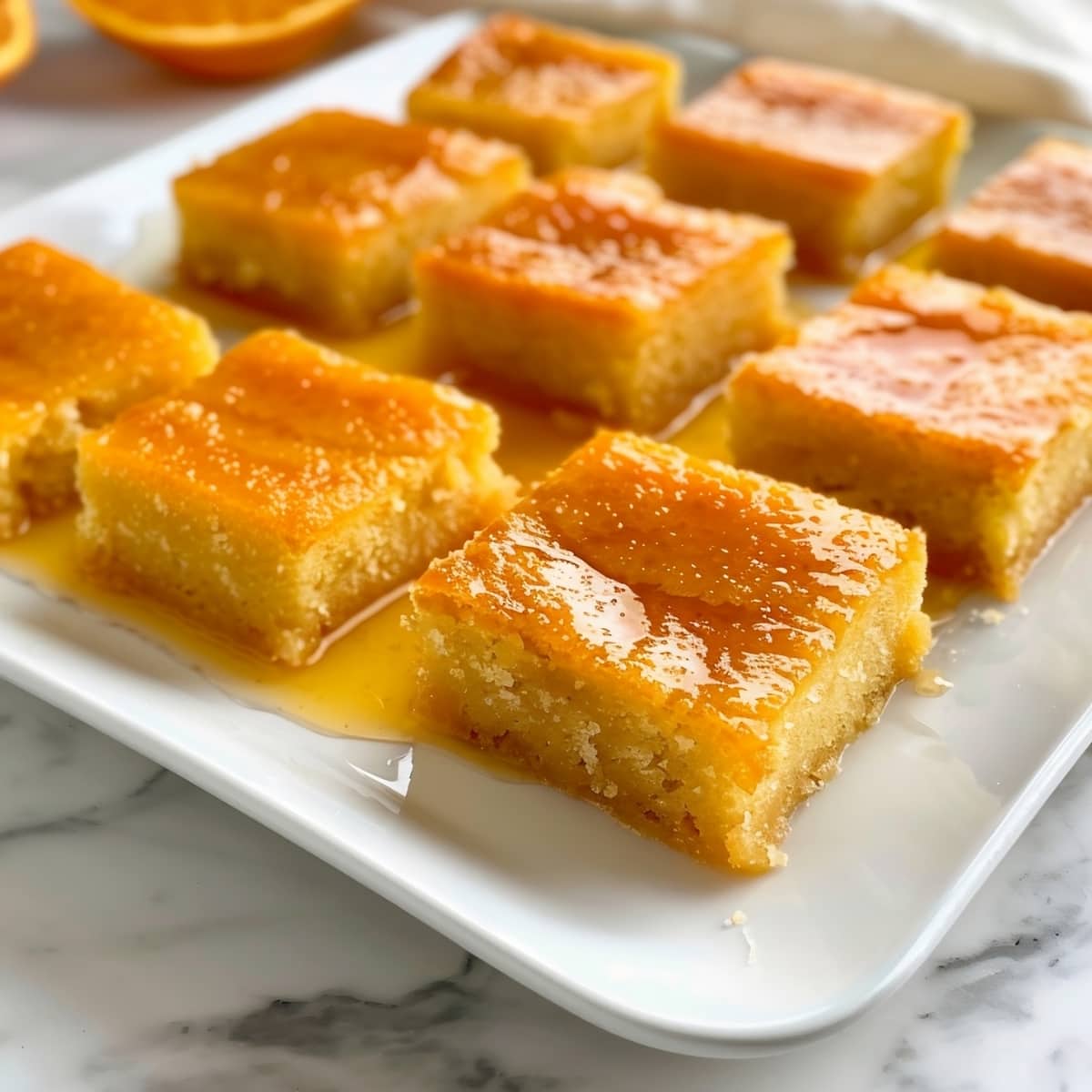
- Chill the syrup. Prepare the orange syrup ahead of time. Let it cool to room temperature before pouring over the hot cake.
- Take a shortcut. Mix the cake batter in a food processor or blender for a quick and easy preparation.
- Chill overnight. Cover and refrigerate the cake for at least a few hours or overnight after adding the syrup. It makes the flavor even better.
- Experiment and have fun. Make a “lemonopita” using lemons instead of oranges. Add chocolate chips, dried cranberries, or raisins to the batter.
- Make serving sensational. Serve chilled or at room temperature with a scoop of vanilla ice cream or a dollop of Greek yogurt. Drizzle with chocolate syrup or ganache for a chocolate-orange combo. Garnish with candied orange slices if desired.
How to Store
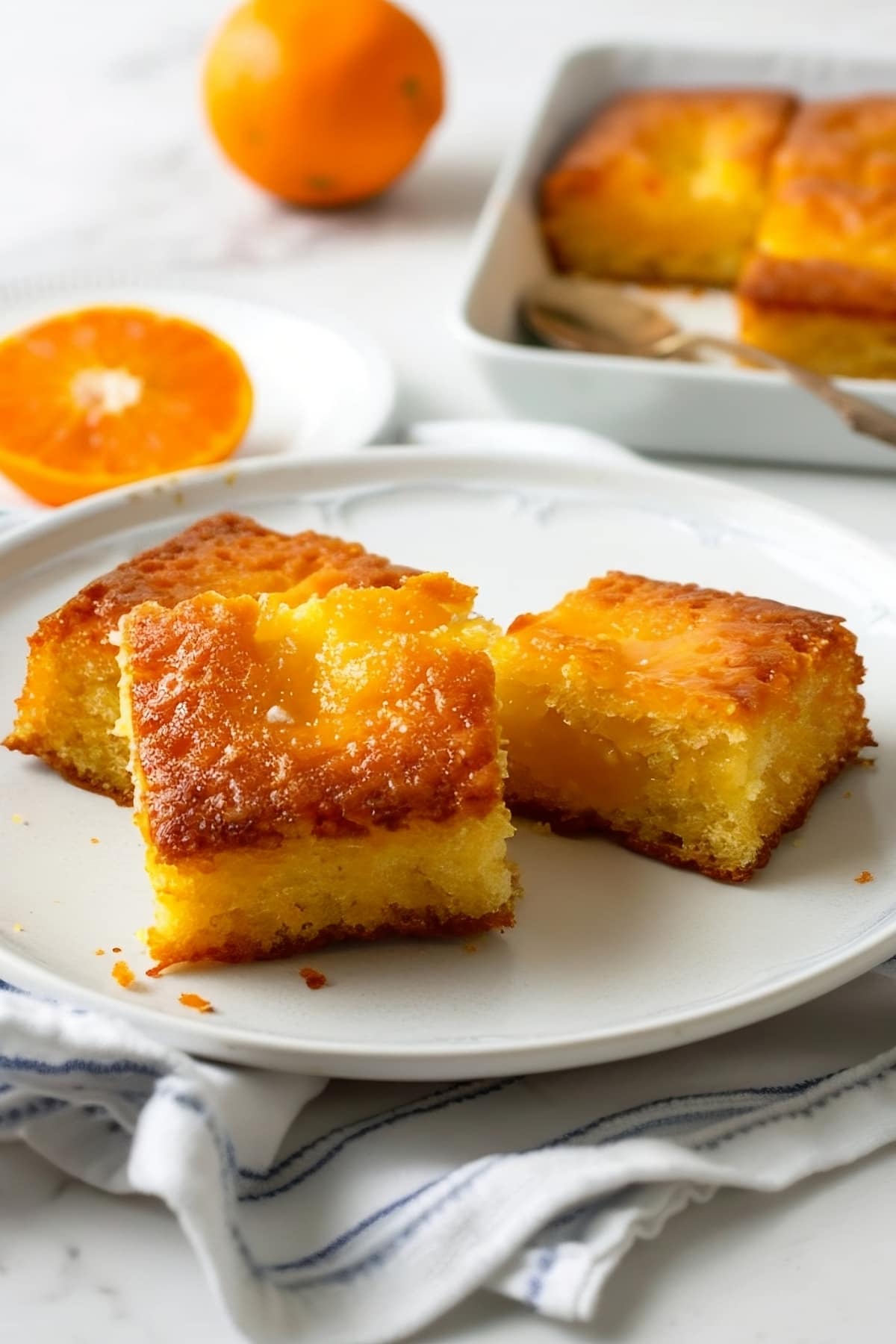
It’s not recommended to freeze portokalopita . The delicate texture of the phyllo-based cake may become soggy. It’s best enjoyed fresh or refrigerated.
To Store: Keep Greek orange cake covered in the refrigerator for up to 5 days. The flavors will meld and intensify over time, making it even more delicious.
Greek Orange Cake
16
25
50
413
This traditional Greek orange cake is full of citrus flavor! It’s moist, delicious, and guaranteed to satisfy.
Ingredients
- For the Syrup
- 1 1/2 cups sugar
- 1 1/2 cups water
- juice and peels from 3 oranges
- 1 cinnamon stick
- For the Cake
- 1 (16-ounce) package phyllo dough, thawed
- 4 large eggs
- 1 cup sugar
- 1 1/2 teaspoons orange zest
- 1 cup Greek yogurt
- 1 teaspoon vanilla extract
- 2 teaspoons baking powder
- 1 teaspoon baking soda
- 1 cup (240 ml) vegetable oil
- 1/2 cup orange juice
Instructions
Make the syrup: Combine the sugar, water, orange juice and peel, and cinnamon stick in a medium saucepan. Bring to a boil over medium heat, then reduce the heat to low and simmer for 10-15 minutes until slightly thickened. Set aside to cool completely.
Preheat the oven to 350°F (180°C). Grease a 9×13 inch baking pan and line 2 baking sheets with parchment.
Dry the phyllo: Roll the thawed phyllo into tubes then cut into 1/2-inch wide strips. Separate and spread out the strips on the baking sheets and bake for 10-15 minutes until completely dry and lightly browned. Let cool and crumble into small pieces.
Make the cake: In a large bowl, beat the eggs and sugar with an electric mixer until pale and thick. Mix in the orange zest, Greek yogurt, vanilla, baking power, and baking soda. Blend in the oil and orange juice on low speed.
Add the crumbled phyllo pieces a little at a time and mix by hand until incorporated. Pour the batter into the prepared pan and spread evenly.
Bake for 40-50 minutes until golden brown and a toothpick inserted in the center comes out clean.
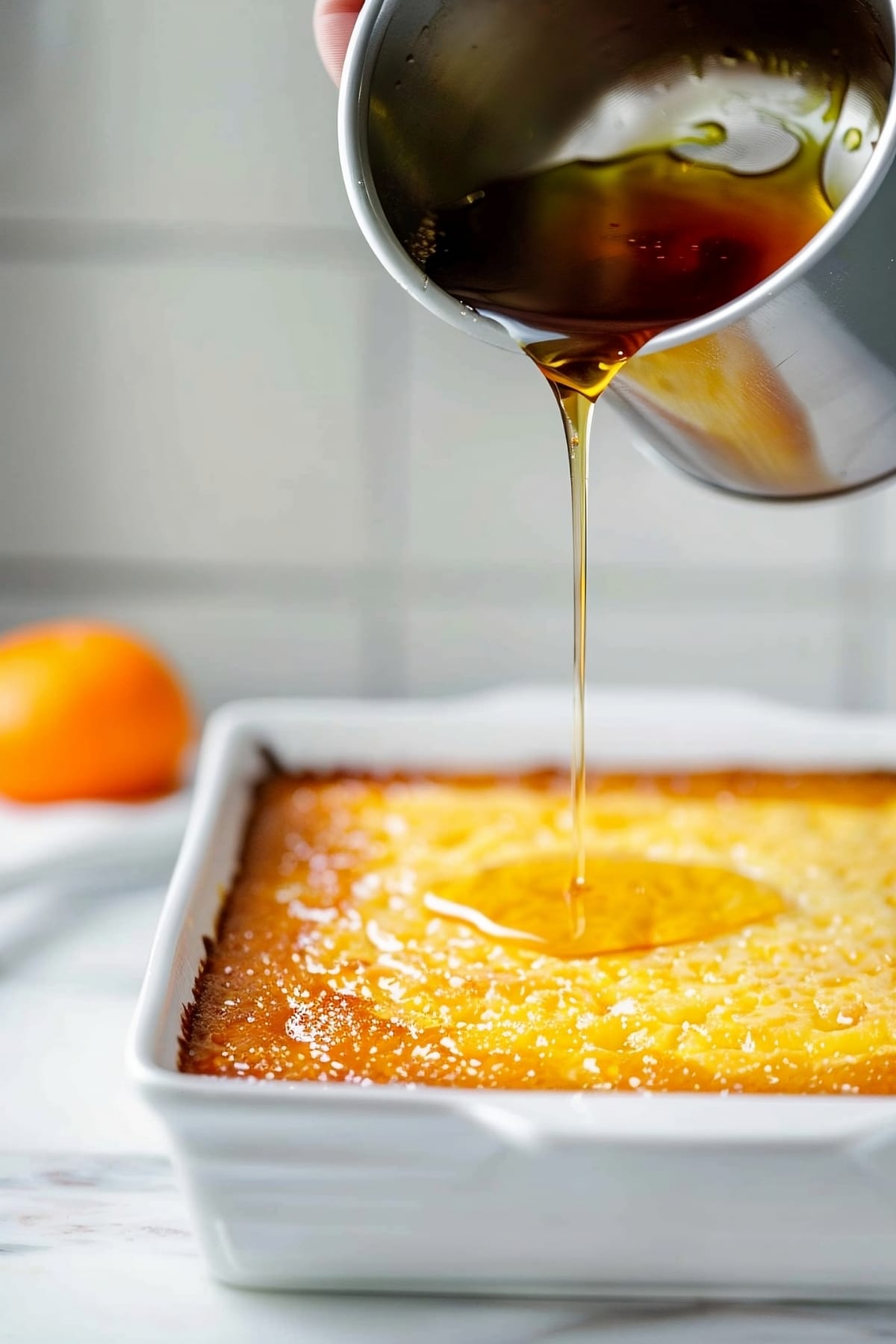
Pour the syrup: Remove the cake from the oven and immediately poke holes over the top with a toothpick or thin skewer. Then, pour the cooled syrup evenly over the hot cake. Do this 1/4 cup at a time, letting the syrup fully absorb before adding more (discard the cinnamon stick and orange peel).
For the best flavor and texture, let the cake cool, then cover and refrigerate for at least 2 hours or overnight before serving. Portokalopita tastes even better the next day!
Share on Facebook
Share on Pinterest
